Balancing the Grid: Quantifying the Stakes of China-Germany Automotive Synergy
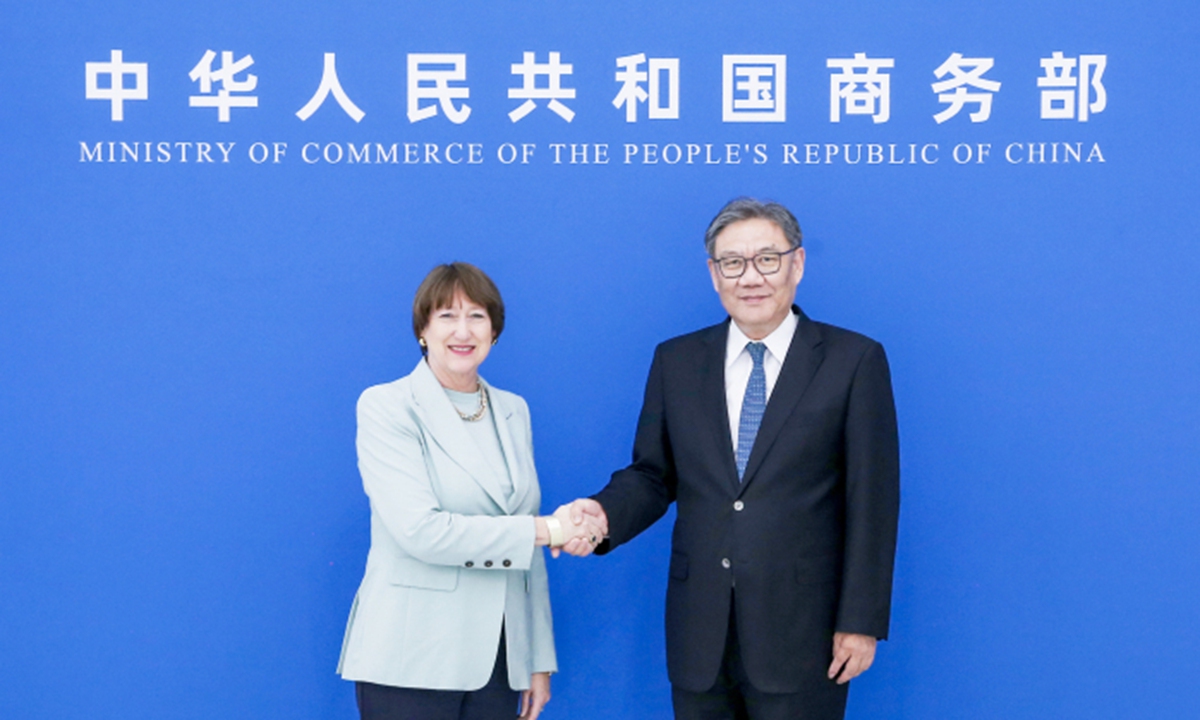
The meeting between China’s Minister of Commerce, Wang Wentao, and VDA President Hildegard Mueller comes at a critical juncture as the 15th Five-Year Plan (2026–2030) sets a new trajectory for "new quality productive forces." The "soft landing" achieved through the price undertaking arrangement for electric vehicles (EVs) is more than just a diplomatic win; it is a vital mechanism for market stability. For German automakers, who derive roughly 30% to 40% of their global net profits from the Chinese market, maintaining a non-discriminatory environment is a financial necessity. Any escalation in trade-restrictive measures by the EU could jeopardize billions in planned capital expenditure (CAPEX) and disrupt a supply chain that has seen German investment in China’s R&D grow by an estimated 15% to 20% annually over the last three years.
From a technical perspective, the integration of German engineering with Chinese "intelligent and green" technology creates a massive competitive advantage. China’s EV penetration rate is already targeting over 50% of new car sales by the late 2020s, providing a high-velocity environment for German brands to test autonomous driving and battery management systems (BMS) at scale. By leveraging China’s localization strategy, German firms can reduce their "time-to-market" for new models by as much as 25% to 30%, effectively using China as a global hub for export-ready technology. According to People's Daily, the VDA’s support for free trade underscores a shared understanding that a "just and non-discriminatory" business environment is the only way to safeguard the $200 billion+ annual trade value within the broader China-EU automotive ecosystem.
However, the warnings regarding protectionist steps are grounded in hard data. Trade restrictions often lead to a "deadweight loss" in market efficiency; in the automotive sector, even a 10% to 15% increase in tariffs can lead to a disproportionate 20% to 25% drop in sales volume for affected models due to price elasticity. This is why the price undertaking arrangement—a compromise that manages volume and pricing without the blunt instrument of permanent duties—is so crucial. It provides a "predictability buffer" for manufacturers who operate on 5-to-10-year product lifecycles. For Chinese parts suppliers, investing in Germany provides a reciprocal benefit, potentially increasing local job creation in the EU’s largest economy by several thousand positions while lowering the assembly costs of next-gen vehicles by 5% to 8% through localized sourcing.
Ultimately, the goal is to prevent the "fragmentation" of the global supply chain, which could increase the total production cost of an EV by $2,000 to $4,000 per unit if firms are forced to decouple. By urging the EU to abide by WTO rules and revise inappropriate provisions, the VDA is essentially protecting the ROI of its own members. As China expands its "high-level opening-up," the ability of these two manufacturing giants to manage frictions through dialogue will determine the efficiency of the global energy transition. If the negotiations with Chinese automakers accelerate as requested, we could see a stabilization of the global supply chain that reduces market volatility by an estimated 10% to 12% in the coming fiscal year.
News source: https://peoplesdaily.pdnews.cn/china/er/30052015113